
What is SEO | A Complete Beginner For Guide
If you’ve ever built a website, started a blog, or launched an online business, chances are you’ve heard the term SEO thrown around a lot. People say things like “SEO is important” or “You won’t rank without SEO”—but rarely explain it in a simple, practical way.
Thank you for reading this post, don't forget to subscribe!This guide is here to fix that.
Whether you’re a complete beginner or someone who wants a clear, no-fluff explanation of SEO, this article will walk you through what SEO is, why it matters, how it works, and how you can start using it today.
Let’s break it down step by step.
What Is SEO?
Definition of Search Engine Optimization
SEO stands for Search Engine Optimization.
In simple terms, It is the process of optimizing your website so that it appears higher in search engine results, especially on Google.
When someone searches for something like “best running shoes” or “how to start a blog”, SEO helps your website show up on the first page instead of being buried on page 10—where nobody looks.
Search Engine Optimization is all about understanding what people search for, creating content around those searches, and making your website easy for search engines to understand.
Examples of SEO in Real-World Websites
Think about big websites like Amazon, Wikipedia, or blogs you regularly read. They didn’t rank by accident. They:
- Use targeted keywords
- Publish helpful content
- Optimize page structure
- Build authority over time
Even small blogs can rank well with the right SEO strategy.
How SEO Helps Websites Rank on Google
Google’s job is to give users the best and most relevant answers to their questions. SEO helps Google understand that your content is useful, trustworthy, and relevant.
When your website follows SEO best practices:
- Google can crawl your pages easily
- Your content matches user search intent
- Your site loads fast and works well on mobile
- Other websites trust and link to you
All of these signals help Google decide where your website should rank.
Why Is SEO Important in Digital Marketing
SEO Drives Organic and High-Quality Traffic
SEO brings in organic traffic, which means visitors come to your site naturally through search engines.
This traffic is powerful because:
- Users are already searching for your topic
- They have high intent
- Conversion rates are usually higher than ads
In short: SEO brings the right people to your website.
Role of SEO in Brand Visibility and Awareness
If your website ranks on the first page of Google, people start recognizing your brand—even if they don’t click right away.
Repeated visibility builds:
- Trust
- Authority
- Brand awareness
That’s huge in competitive industries.
SEO vs Other Digital Marketing Channels
Unlike social media posts that disappear quickly, SEO content can:
- Rank for months or years
- Generate passive traffic
- Support other marketing channels
SEO works well alongside:
- Content marketing
- Social media
- Email marketing
- Affiliate marketing
Long-Term Benefits of SEO for Businesses
SEO is not a quick win—it’s a long-term investment.
Once you rank:
- Traffic keeps coming
- Costs stay low
- ROI increases over time
That’s why businesses that focus on SEO early often dominate later.
SEO vs Paid Search (SEO vs PPC)
SEO is often compared with paid advertising like Google Ads (PPC).
Here’s the difference:
- SEO = Free, organic traffic (long-term results)
- PPC = Paid traffic (instant but stops when you stop paying)
SEO takes time, but once your page ranks, you can get traffic 24/7 without paying for every click. That’s why SEO is considered one of the most powerful digital marketing strategies.
What Are the Main Types of SEO
On-Page SEO Explained
On-page SEO focuses on what’s on your website.
It includes:
- Keyword optimization
- Meta titles and descriptions
- Headings (H1, H2, H3)
- Internal linking
- Content quality
Good on-page SEO helps both users and search engines understand your content.
Off-Page SEO and Link Building
Off-page SEO is about signals outside your website, mainly backlinks.
Backlinks are links from other websites to yours.
Google sees them as votes of trust.
The more high-quality backlinks you have, the more authoritative your site appears.
Technical SEO Fundamentals
Technical SEO ensures your website works properly behind the scenes.
It includes:
- Site speed
- Mobile-friendliness
- Secure HTTPS
- Crawlability
- Clean URL structure
Even great content won’t rank if technical SEO is poor.
Local SEO and Its Importance for Small Businesses
Local SEO helps businesses appear in local search results, like:
- “best dentist near me”
- “coffee shop in New York”
It’s crucial for:
- Local services
- Physical stores
- Service-based businesses
How SEO Works in Search Engines
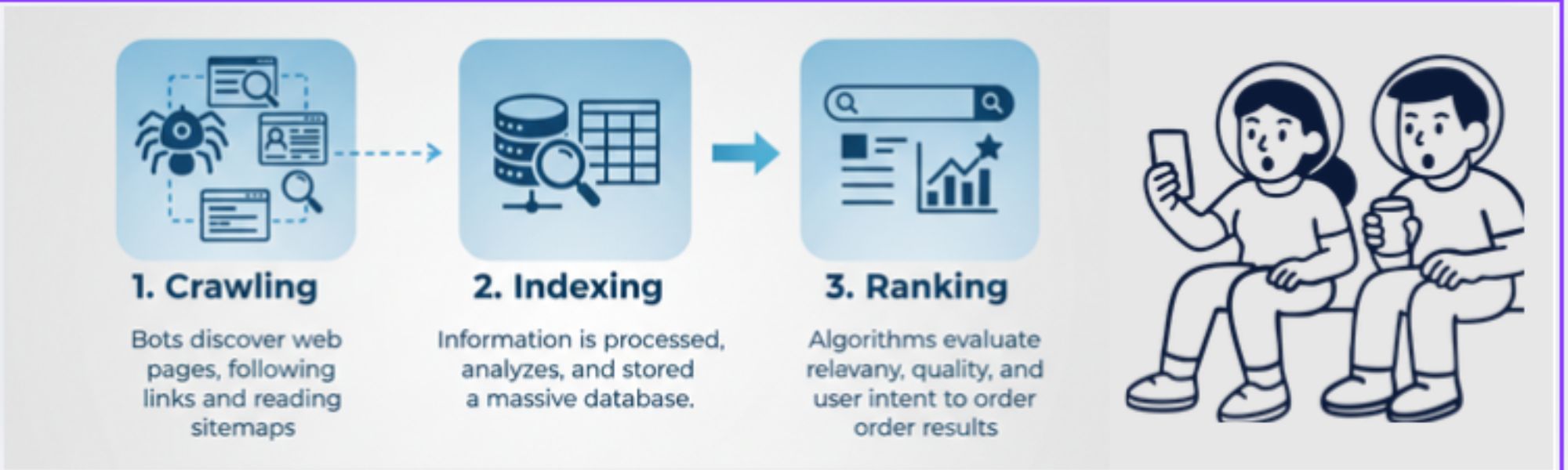
This part explains the behind-the-scenes process of how search engines like Google find, understand, and rank web pages. It prepares readers to understand crawling, indexing, ranking factors, and the role of keywords in search results.
How Search Engines Crawl Websites
Search engines use bots (called crawlers) to discover new pages.
They:
- Visit pages
- Follow links
- Collect data
If your site is hard to crawl, your pages may never rank.
Indexing Process in Google Search
Once Google crawls your page, it decides whether to store it in its index.
If indexed, your page is eligible to appear in search results.
Not all pages get indexed—thin or duplicate content may be ignored.
Ranking Factors Used by Search Engines
Google uses hundreds of ranking factors, including:
- Content relevance
- Page experience
- Backlinks
- Keywords
- User behavior
No single factor guarantees ranking—SEO is about balance.
Can a Website Rank Without SEO
Organic Ranking Without SEO Efforts
Yes, a website can rank without intentional SEO—but it’s rare.
It usually happens when:
- Competition is low
- Content is extremely unique
- The topic is new
Importance of SEO for Competitive Keywords
For competitive niches, SEO is non-negotiable.
Without SEO:
- You’ll struggle to rank
- Competitors will outrank you
- Traffic potential stays low
Limitations of Ranking Without SEO
Without SEO optimization:
- Pages may load slowly
- Content may not match search intent
- Google may overlook your site
SEO removes these barriers.
When SEO Becomes Necessary for Growth
If you want:
- Consistent traffic
- Scalable growth
- Long-term visibility
SEO is no longer optional—it’s essential
How Google Algorithm Updates Impact SEO
What Are Google Algorithm Updates
Google regularly updates its algorithm to improve search quality.
Some updates are small; others significantly impact rankings.
Major Google Updates and Their Purpose
Updates like:
- Panda (content quality)
- Penguin (link spam)
- Helpful Content Update
All aim to reward helpful, user-focused websites.
How to Stay Safe from Google Penalties
Best practices:
- Avoid black-hat SEO
- Focus on quality content
- Build natural backlinks
- Prioritize user experience
How to Start SEO as a Beginner
Basic SEO Concepts Every Beginner Should Know
Start with:
- Keywords
- Search intent
- Content quality
- Website basics
You don’t need advanced tactics at first.
Keyword Research for Beginners
Keyword research helps you find:
- What people search for
- How competitive keywords are
- Content opportunities
Free tools like Google Keyword Planner and Ubersuggest
On-Page SEO Checklist for New Websites
Beginner checklist:
- One main keyword per page
- Clear headings
- Internal links
- Optimized images
- Mobile-friendly design
Free SEO Tools for Learning SEO
Popular beginner tools:
- Google Search Console
- Google Analytic
- Ahrefs Webmaster Tools
- Yoast SEO
What Are the Main Factors of SEO Optimization
Content Quality and Keyword Optimization
High-quality content that answers user questions always wins.
Focus on:
- Depth
- Clarity
- Originality
- Search intent
Website Speed and Mobile Friendliness
Fast-loading, mobile-friendly sites rank better and convert more.
User experience matters more than ever.
Backlinks and Domain Authority
Strong backlinks signal trust and authority.
Focus on quality—not quantity.
User Experience and Technical SEO Factors
Easy navigation, clean design, and technical health improve rankings and retention.
Final Thoughts
SEO isn’t magic—and it’s not as complicated as it seems.
At its core, SEO is about:
- Helping users
- Creating valuable content
- Making websites easy to understand
If you stay consistent and patient, SEO can become one of your most powerful traffic sources.