
Types of SEO: On-Page, Off-Page and Technical SEO
Simply having a website isn’t enough — your audience needs to find it. That’s where Search Engine Optimization (SEO) comes in. SEO is the process of improving your website’s visibility on search engines like Google, Bing, and Yahoo to attract organic (non-paid) traffic. It involves using the right strategies, keywords, and techniques to ensure your content ranks higher when people search for products or information related to your business.
SEO plays a vital role in digital marketing because it drives consistent, long-term traffic without relying on paid ads. A well-optimized website not only boosts brand credibility but also enhances user experience, helping businesses build trust and authority online.
There are several types of SEO, each focusing on different aspects of optimization. The three main categories — On-Page SEO, Off-Page SEO, and Technical SEO — work together to improve visibility, performance, and reputation. Additionally, niche strategies like Local SEO, E-Commerce SEO, and Mobile SEO cater to specific goals and audiences. Understanding these types is the first step toward building a strong, results-driven SEO strategy.
What Are the Main Types of SEO?
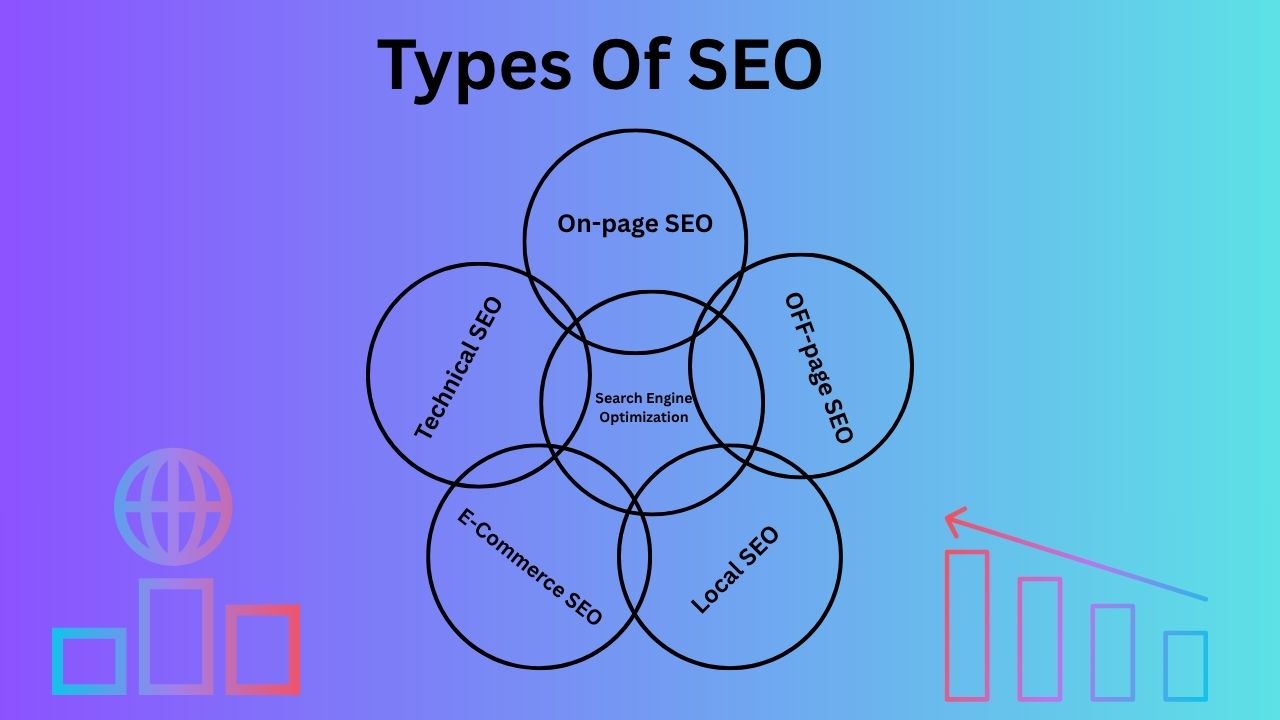
SEO can be divided into several key types, each targeting a different part of your website’s performance and visibility:
- On-Page SEO – focuses on optimizing content and page structure.
- Off-Page SEO – builds your website’s authority through external links and mentions.
- Technical SEO – improves crawlability, indexing, and performance.
- Local SEO – helps your business show up in nearby searches.
- E-Commerce SEO – boosts visibility for online stores.
- Mobile SEO – ensures your site works perfectly on all mobile devices.
Each type plays a role in your overall SEO strategy — and combining them delivers the best results.
1. On-Page SEO: Optimizing Content and Website Structure
On-page SEO focuses on everything you can control on your own website to make it more appealing to search engines and readers. It’s about creating content that’s not only useful but also easy for Google to understand.
On-page SEO involves optimizing the parts of your website that you have direct control over. This includes:
Key Elements Of On-Pages SEO
- Keyword optimization — using relevant search terms naturally in content.
- Meta tags optimization — crafting compelling meta titles and descriptions.
- URL structure — keeping URLs short, clean, and descriptive.
- Internal linking — connecting related pages to improve navigation.
- Content optimization — ensuring your content is valuable, clear, and keyword-rich.
On-Page SEO Checklist for Beginners
- Include target keywords in titles, headings, and the first paragraph.
- Optimize images with proper alt text and file names.
- Add internal and external links.
- Ensure that pages load quickly and are mobile-friendly.
2. Off-Page SEO: Building Authority and Credibility
Off-page SEO is all about building your website’s reputation and trust beyond your own pages. Think of it as what others say about your site on the internet.
Link Building and Backlinks
Backlinks are still one of Google’s top ranking factors. Use link-building strategies like guest posting, influencer outreach, and forum posting to earn quality links.
Social Signals and Brand Mentions
Boost visibility by engaging on social media platforms. Mentions and shares act as credibility signals that strengthen your off-page SEO profile.
3. Technical SEO: The Foundation of High Rankings
Technical SEOdeals with the behind-the-scenes setup of your website —making sure it runs smoothly and can be easily crawled and understood by search engines.
Site Speed, Mobile-Friendliness, and Crawlability
A slow or poorly coded site hurts rankings. Focus on:
- Site speed optimization
- Mobile-first indexing
- Crawlability and indexing improvements
Best Technical SEO Practices for 2025
- Submit an XML sitemap to Google Search Console.
- Use structured data (schema markup).
- Implement canonical tags to avoid duplicate content.
Ensure HTTPS security across your site.

4. Local SEO: Attracting Nearby Customers
Steps to Improve Local SEO
- Claim and optimize your Google Business Profile.
- Encourage customers to leave positive reviews.
- Add local keywords (like city or region) to your content.
Tools for Local Search Optimization
Tools like Google Maps, Moz Local, and BrightLocal help manage your listings and monitor local rankings.
5. E-Commerce SEO: Boosting Online Store Visibility
Product Page Optimization
- Use descriptive titles, optimize product images, and include detailed product descriptions with keywords.
Common E-Commerce SEO Mistakes
- Avoid duplicate product pages, missing meta tags, and unoptimized URLs.
6. Mobile SEO: Optimizing for Mobile-First Indexing
Why Mobile Optimization Matters
- With most searches happening on smartphones, mobile SEO is critical for visibility and conversions.
How to Test and Improve Mobile SEO
- Use Google’s Mobile-Friendly Test, compress images, and make navigation simple and touch-friendly.
7. International SEO: Expanding Across Borders
Using hreflang Tags and Localization
- Hreflang tags tell Google which language or region a page targets, preventing duplicate content issues.
Common International SEO Challenges
- Watch for translation errors, currency display issues, and inconsistent metadata.
8. Image SEO: Making Visuals Work for Search
How to Optimize Images for SEO
- Compress images, name files descriptively, and use relevant alt text.
Best Practices for Image Alt Text
- Keep alt text short, descriptive, and keyword-friendly to help Google understand your visuals.
9. Voice SEO: Ranking for Voice Search Queries
How Voice Search Changes SEO
- Voice search focuses on natural, conversational keywords — people ask questions instead of typing phrases.
Tips to Optimize for Conversational Keywords
- Use FAQs and long-tail keywords.
- Write in a natural tone.
- Target featured snippets.
10. Video SEO: Reaching Audiences Through Video Content
YouTube SEO Best Practices
- Include keywords in titles, descriptions, and tags.
- Add closed captions and time stamps.
- Encourage engagement (likes, shares, comments).
Video Schema and Metadata Optimization
- Implement video schema markup to help your videos appear in Google’s video carousel.
Common SEO Mistakes to Avoid
- Keyword stuffing or over-optimization.
- Ignoring mobile SEO and technical SEO types.
- Neglecting content quality or user intent.
- Building black hat SEO links that can harm rankings.
Best SEO Tools for Beginners and Businesses
- Google Search Console – for performance tracking and indexing.
- Ahrefs / SEMrush – for keyword research and backlink analysis.
- Yoast SEO / Rank Math – for on-page optimization in WordPress.
- Screaming Frog – for technical SEO audits.
How to Choose the Right Type of SEO for Your Business
Your ideal SEO method depends on your goals:
- Local businesses → focus on Local SEO.
- Online stores → invest in E-Commerce SEO.
- International brands → prioritize International SEO.
- Content-heavy sites → emphasize On-Page SEO and Technical SEO.
Combining multiple kinds of SEO often produces the strongest results.
Final Thoughts: Combining SEO Types for Long-Term Success
SEO isn’t about choosing just one type — it’s about blending several SEO strategies for lasting growth.
Focus on building a strong foundation with on-page, off-page, and technical SEO, then expand into specialized areas like mobile, voice, and international SEO as your site grows.
By mastering these types of SEO techniques, you’ll not only improve your search rankings but also build a site that users (and search engines) love.